🚀 Inventions and machines 🏗️ Buildings and structures
Dams
📖 In short
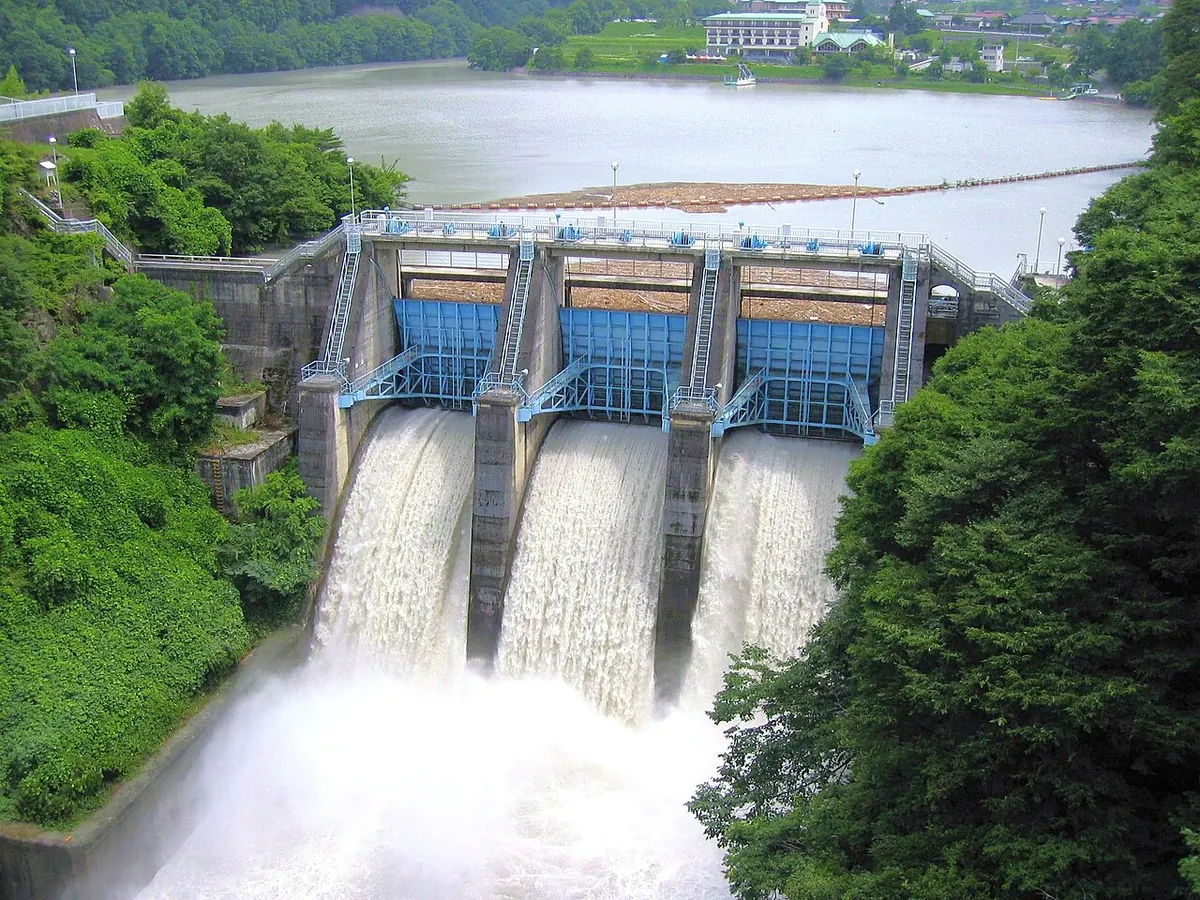
A dam is a huge structure built across a river to hold water back. People collect water in the rainy season to use in dry times, for drinking and farming. Some dams are small and made of earth, and some are huge and made of concrete, as tall as skyscrapers.
🤩 Did you know?
- The Gordon Dam in Tasmania is one of Australia's biggest dams.
- Some dam power stations produce thousands of megawatts of electricity.
- A dam is built thick at the bottom because that's where the water pressure is greatest.
- The Marib Dam in Yemen is one of the oldest dams in the world.
🔎 Find out more
🌟 A lake behind the dam
When a dam is built, water rises behind it and forms a big lake. Water is taken from this lake through channels to towns and farms.
🔍 Electricity from water
Many dams have power stations: water rushes down from behind the dam and turns big wheels called turbines, which make clean electricity.
💡 Famous dams
Egypt has the Aswan High Dam on the Nile, which protects against floods and makes Lake Nasser. China's Three Gorges Dam is the biggest hydroelectric power station in the world. And Yemen has the remains of the ancient Marib Dam.
🎯 Beaver dams
We're not the only dam builders! Beavers build dams of branches and mud in rivers to make a pond to live in.
📸 More pictures
🧩 Test yourself
1 Why do we build dams?
2 What is the big dam on the Nile in Egypt called?
3 Which picture shows “Dams”?
🚀 Discover more
📷 Picture sources: Wikimedia Commons
- Wiki Commons users Qurren at https://commons.wikimedia.org/wiki/User:Qurren · CC BY-SA 3.0
- Andy Pernick, a Bureau of Reclamation photographer · Public domain
- California Department of Water Resources · Public domain
- Qurren · CC BY-SA 3.0


