Mirrors
📖 In short
A mirror is a very smooth, shiny surface that reflects most of the light that hits it, so we see ourselves and other things in it. We look in mirrors to do our hair, drivers use them to see behind them, and scientists use them in telescopes.
🤩 Did you know?
- A mirror's surface must be very smooth to reflect clear pictures.
- There are three kinds of mirrors: flat, convex and concave.
- Ancient mirrors were pieces of polished metal.
- Still water works like a mirror.
🔎 Find out more
🌟 How is it made?
A mirror is usually made from a smooth sheet of glass whose back is coated with a thin shiny layer of silver or aluminum, then covered with paint to protect it.
🔍 The flipped image
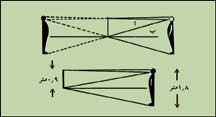
When you raise your right hand in front of a mirror, it looks as if you're raising your left! That's because a mirror flips the picture from right to left. Write a word and read it in the mirror, and you'll see it backwards.
💡 Three kinds
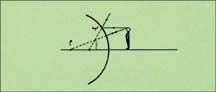
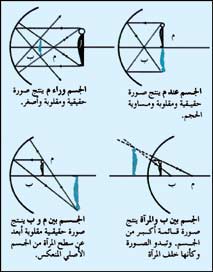
A flat mirror gives a picture the same size. A convex mirror, which bulges out, gives a smaller picture but shows a wide area, so it's used in cars and on street corners. A concave mirror makes the picture bigger, like a shaving mirror.
🎯 Giant mirrors
Big telescopes have huge concave mirrors that gather the faint light of faraway stars, so scientists can see very distant galaxies.
📸 More pictures
🧩 Test yourself
1 What does a mirror do with light?
2 Which mirror is put on street corners to show a wide area?
3 Which picture shows “Mirrors”?