🌋 Planet Earth 💎 Rocks and minerals
Geology
📖 In short
Geology is the science of the Earth: how it formed, what it's made of and how it changes. Scientists who study it are called geologists, and they study rocks, soil, mountains, volcanoes, earthquakes, rivers, caves and even fossils.
🤩 Did you know?
- The Roman Pliny the Elder wrote an encyclopedia with knowledge about rocks and minerals.
- Geology has two main branches: physical geology and historical geology.
- Geologists can tell the age of some rocks precisely.
- Some geologists also study rocks from the Moon and Mars.
🔎 Find out more
🌟 Earth detectives
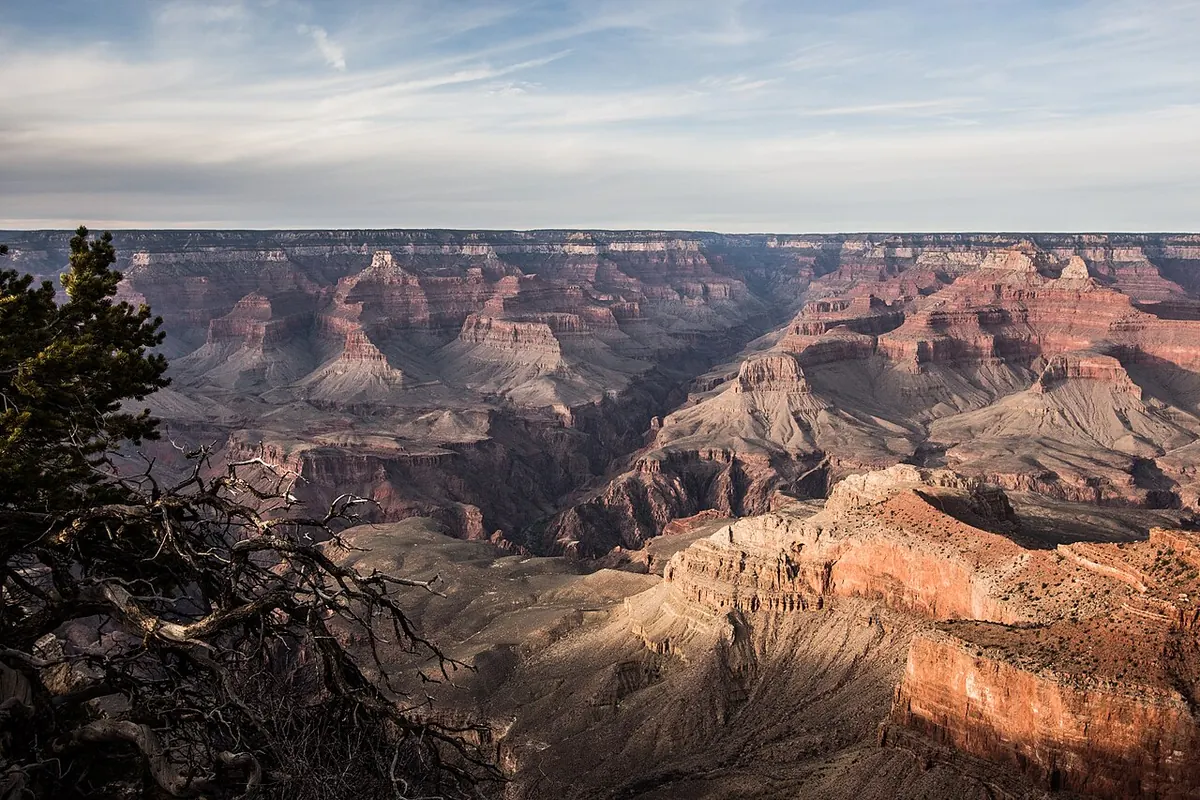
A geologist is like a detective, reading rock layers like the pages of a book to find out what happened millions of years ago: was there a sea here, a desert or a volcano?
🔍 The geologist's tools
A geologist carries a special hammer to break rocks, a magnifying glass to see their grains, a compass and a map, and collects samples in little bags.
💡 A useful science
Geologists help find underground water, minerals and oil, study volcanoes and earthquakes to warn people of danger, and choose safe places to build dams and bridges.
🎯 Scholars of old
People have been interested in rocks since ancient times: the Muslim scholar al-Biruni wrote about minerals and gemstones, and Ibn Sina (Avicenna) wrote about how mountains form.
🧩 Test yourself
1 What does geology study?
2 What tool does a geologist carry to break rocks?
3 Which picture shows “Geology”?
🌋 Discover more
📷 Picture sources: Wikimedia Commons
- Tomascastelazo · CC BY-SA 3.0
