🚀 Inventions and machines 🚗 On land
Locomotives
📖 In short
A locomotive is the powerful engine at the front of a train that pulls or pushes passenger and freight cars along the rails. It has changed a lot, from the first smoke-puffing steam engines to today's fast electric locomotives.
🤩 Did you know?
- The first locomotives weighed only between 2.5 and 5.5 tonnes.
- A modern locomotive can weigh more than 600 tonnes.
- There are several kinds of diesel locomotive, including diesel-electric.
- George Stephenson built the famous steam locomotive “Rocket” about 200 years ago.
🔎 Find out more
🌟 The steam locomotive
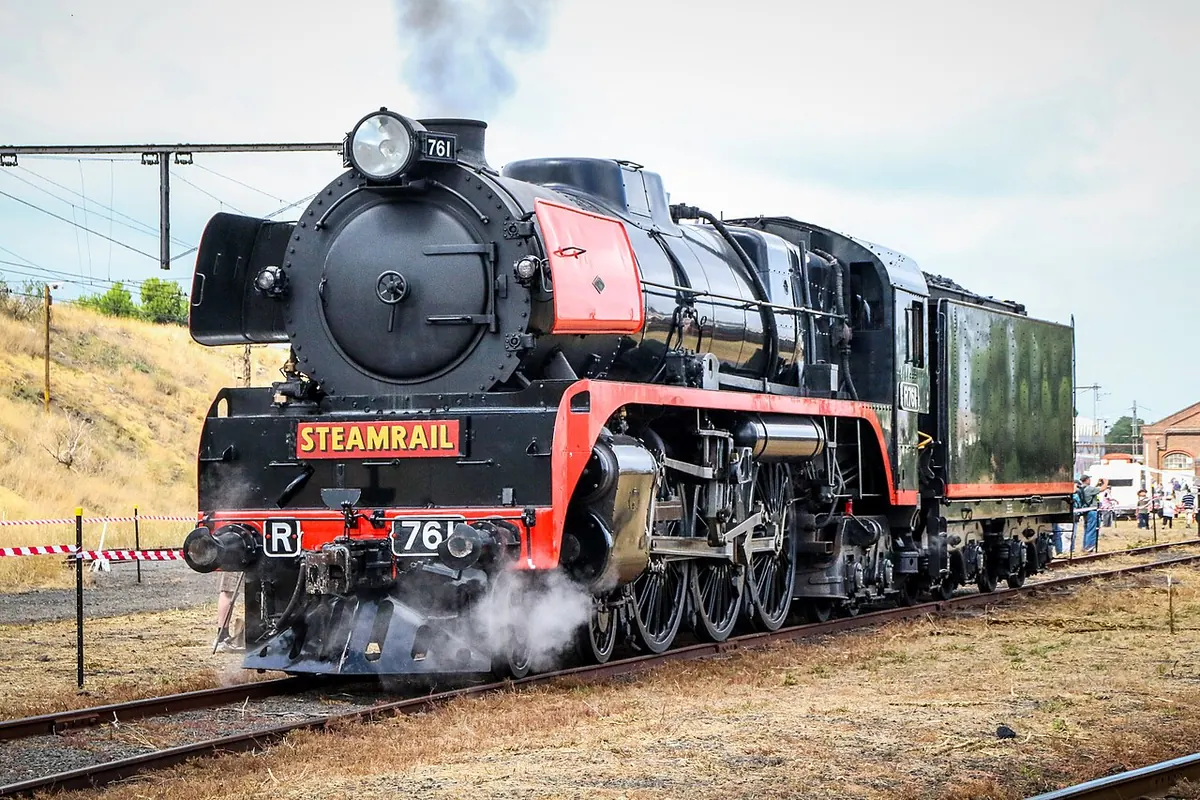
The first locomotives burned coal to heat water in a big boiler, turning it into steam that pushed rods to turn the wheels. They were loud and puffed out smoke and white steam.
🔍 Diesel locomotives
Diesel locomotives burn a fuel called diesel in a big engine, and many of them turn that power into electricity to drive the wheels.
💡 Electric locomotives
Electric locomotives take electricity from wires above the track or from a third rail. They're quiet, clean and very fast, and some trains travel at more than 300 kilometers an hour.
🎯 Enormous power
A modern locomotive is very powerful and can pull more than 200 freight cars at once, in a train kilometers long!
🧩 Test yourself
1 What did steam locomotives burn?
2 Where does an electric locomotive get its electricity?
3 A modern locomotive can weigh more than ?? tonnes.
4 Which picture shows “Locomotives”?
🚀 Discover more
📷 Picture sources: Wikimedia Commons
- Max Thum · CC BY-SA 4.0
