🧪 Science 📏 Measuring and time
Measuring
📖 In short
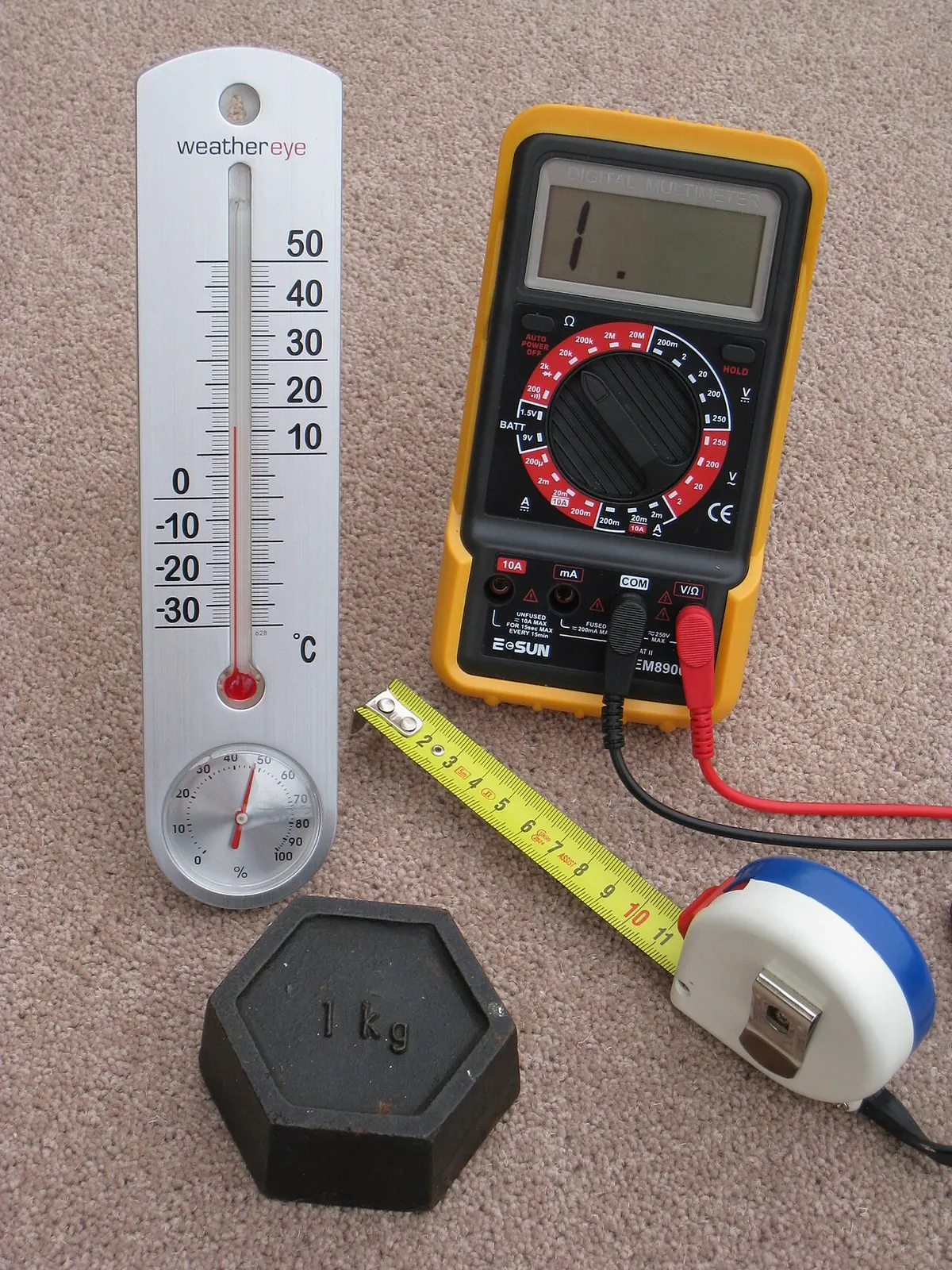
Measuring means finding out how long, heavy, big or hot something is, or how much time it takes. We measure every day: our height, the weight of fruit at the market, the time it takes to get to school and how much water is in a glass.
🤩 Did you know?
- The oldest known scales were found in ancient Egyptian tombs thousands of years old.
- The word “centi” means one part of a hundred.
- The second is the smallest unit of time we use every day.
- Some countries measure length in inches and feet instead of centimeters and meters.
🔎 Find out more
🌟 Units of measurement
We measure length in meters and centimeters, weight in kilograms and grams, liquids in liters, time in hours, minutes and seconds, and temperature in degrees.
🔍 Measuring long ago
Long ago people measured with their bodies: the hand span, the forearm, the foot and the step. But people's arms are different, so measurements differed, and that's why people agreed on fixed units.
💡 The metric system
Most of the world today uses the metric system, which is easy because it's based on ten: a meter is 100 centimeters, a kilometer 1000 meters, and a kilogram 1000 grams.
🎯 Measuring tools
We measure with rulers and tape measures, scales, measuring jugs, clocks and thermometers. Choose the right tool: we don't measure a road with a ruler!
🧩 Test yourself
1 What do we measure weight in?
2 How many centimeters are in a meter?
3 Which picture shows “Measuring”?
🧪 Discover more
📷 Picture sources: Wikimedia Commons
- Martinvl · CC BY-SA 3.0
