Sound
📖 In short
Sound is all around us all the time: birds chirping in the morning, people's voices, music, the patter of rain. Sound happens when something vibrates, and its vibrations travel through the air until they reach our ears.
🤩 Did you know?
- Sound travels through air at about 340 meters per second.
- Piano notes range from about 30 to 15000 hertz.
- The human voice can make frequencies from about 85 to 1100 hertz.
- Dogs and bats hear very high sounds we can't hear.
🔎 Find out more
🌟 Vibration
Put your hand on your throat and talk, and you'll feel a vibration! Every sound starts with a vibration: an oud string, a drum skin, your vocal cords. This vibration moves the air in waves.
🔍 How do we hear?
Sound waves enter your ear and shake a thin membrane called the eardrum, then the vibrations pass to tiny bones and on to the inner ear, which sends a message to the brain.
💡 Loud and soft, high and low
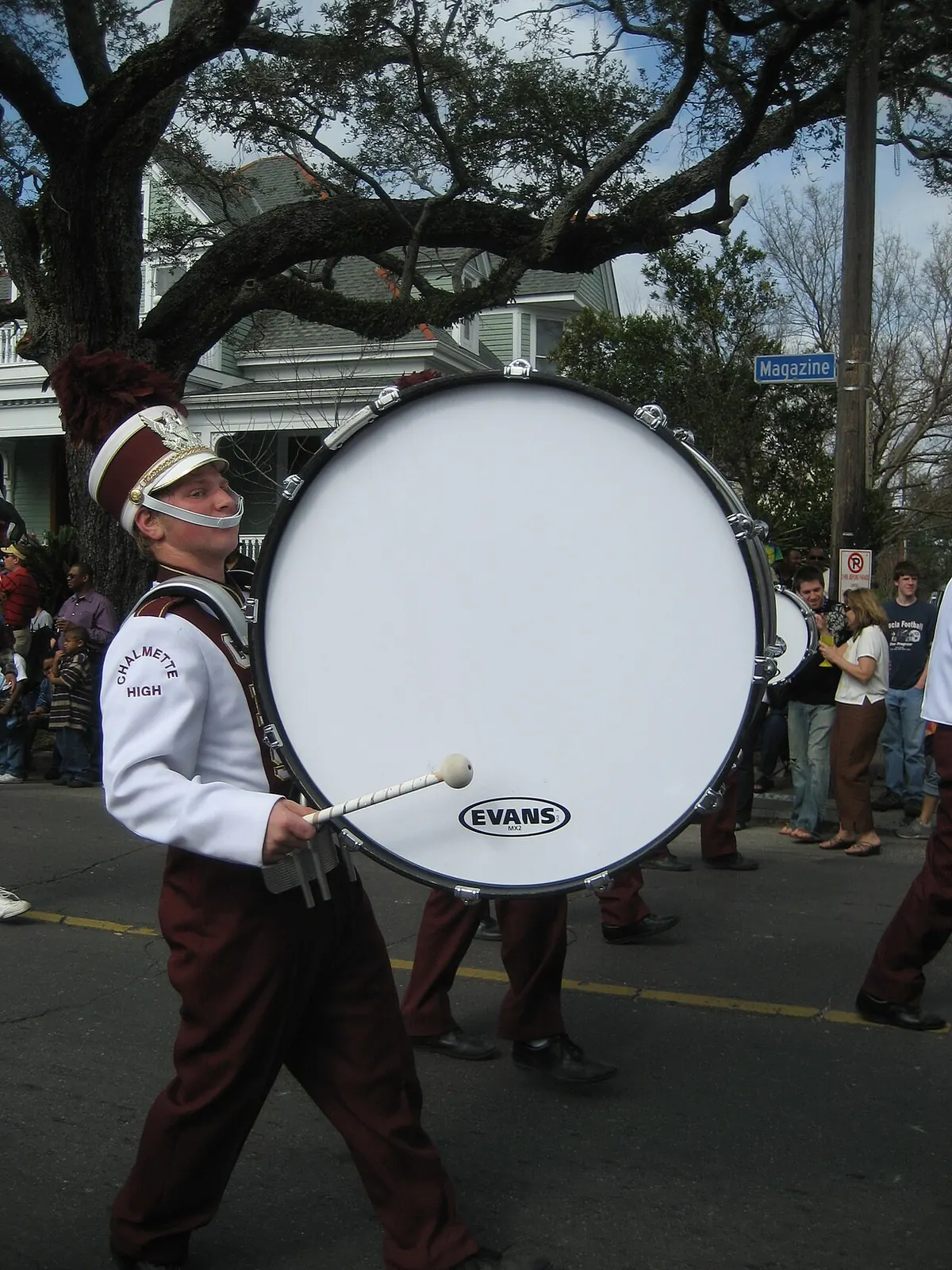
If something vibrates very fast the sound is high, like a bird's whistle, and if it vibrates slowly the sound is low, like a big drum. And the stronger the vibration, the louder the sound.
🎯 Where does sound travel?
Sound travels through air, water and solid things, and it's even faster in water and solids. But it can't travel through empty space, so space is completely silent.
🧩 Test yourself
1 What does every sound start with?
2 Does sound travel through empty space?
3 Sound travels through air at about ?? meters per second.
4 Which picture shows “Sound”?
🧪 Discover more
📷 Picture sources: Wikimedia Commons
- Infrogmation of New Orleans · CC BY-SA 3.0
