🧪 Science 📏 Measuring and time
The metric system
📖 In short
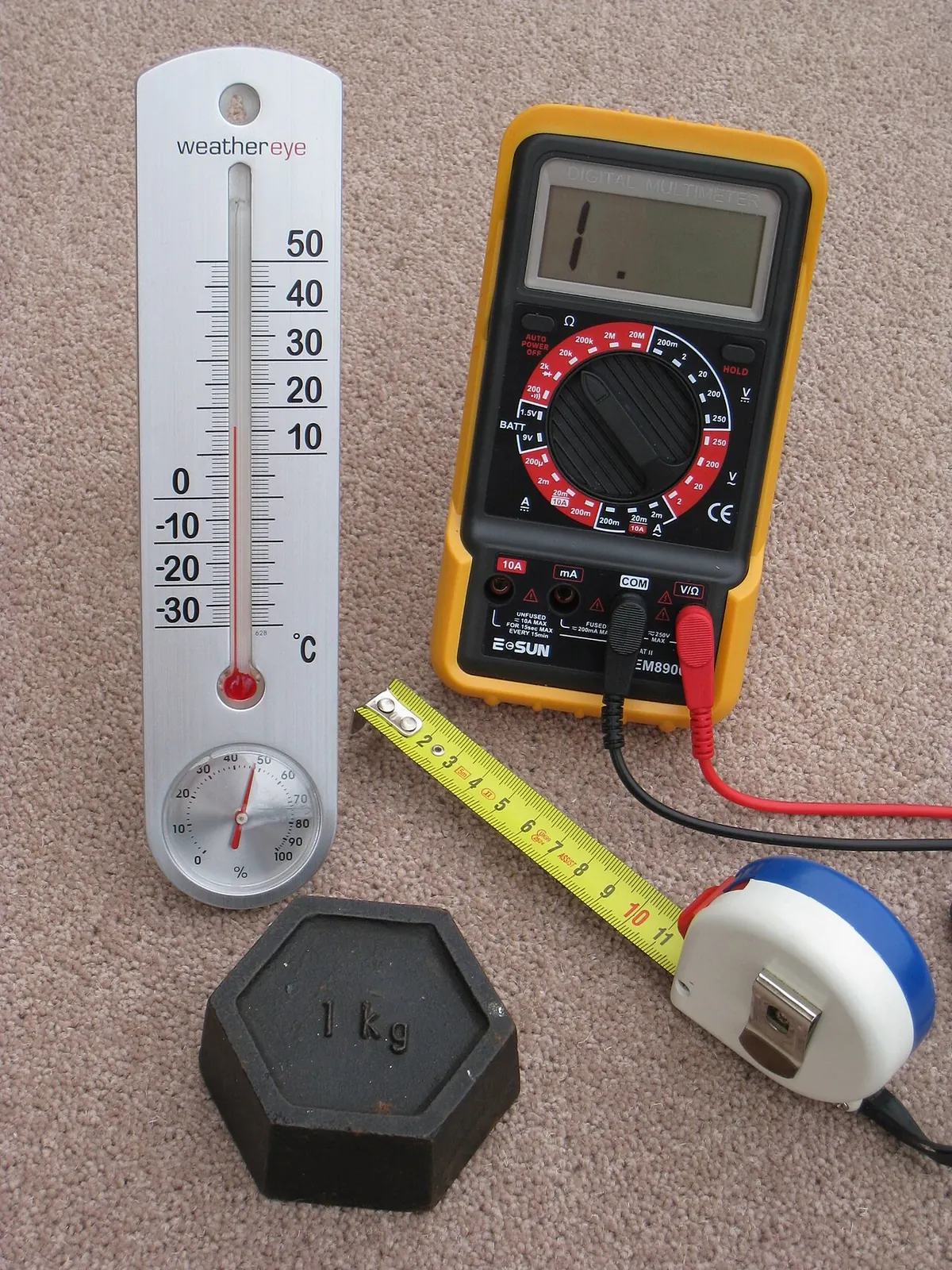
The metric system is a set of easy units of measurement used by most people in the world and by scientists everywhere. In it we measure length in meters, mass in grams and liquids in liters. The best thing about it is that it's based on the number ten!
🤩 Did you know?
- In the metric system each unit equals 10 of the unit just below it.
- More precise standards of length and mass were set at an international meeting between 1870 and 1875.
- The gram was defined as the mass of one cubic centimeter of water at about 4 degrees.
- A few countries still use feet and pounds instead of meters and kilograms.
🔎 Find out more
🌟 Everything in tens
In the metric system each unit is ten, a hundred or a thousand times bigger than the one below: a centimeter is 10 millimeters, a meter 100 centimeters, and a kilometer 1000 meters. So it's easy to convert between them.
🔍 Prefixes
The word “kilo” means a thousand, “centi” means one part of a hundred, and “milli” one part of a thousand. So a kilogram is a thousand grams, and a milliliter is a thousandth of a liter.
💡 The story of the meter
The metric system was created in France more than two hundred years ago, and scientists wanted the meter to be an exact part of the distance between the North Pole and the equator. Today the meter is defined using the speed of light.
🎯 Water and the gram
Scientists linked the units to water: a gram is about the mass of one cubic centimeter of water, and a liter of water has a mass of about one kilogram.
🧩 Test yourself
1 What number is the metric system based on?
2 How many meters are there in a kilometer?
3 In the metric system each unit equals ?? of the unit just below it.
4 Which picture shows “The metric system”?
🧪 Discover more
📷 Picture sources: Wikimedia Commons
- Martinvl · CC BY-SA 3.0
