🪐 Space and stars 🪐 The Sun and planets
Planets
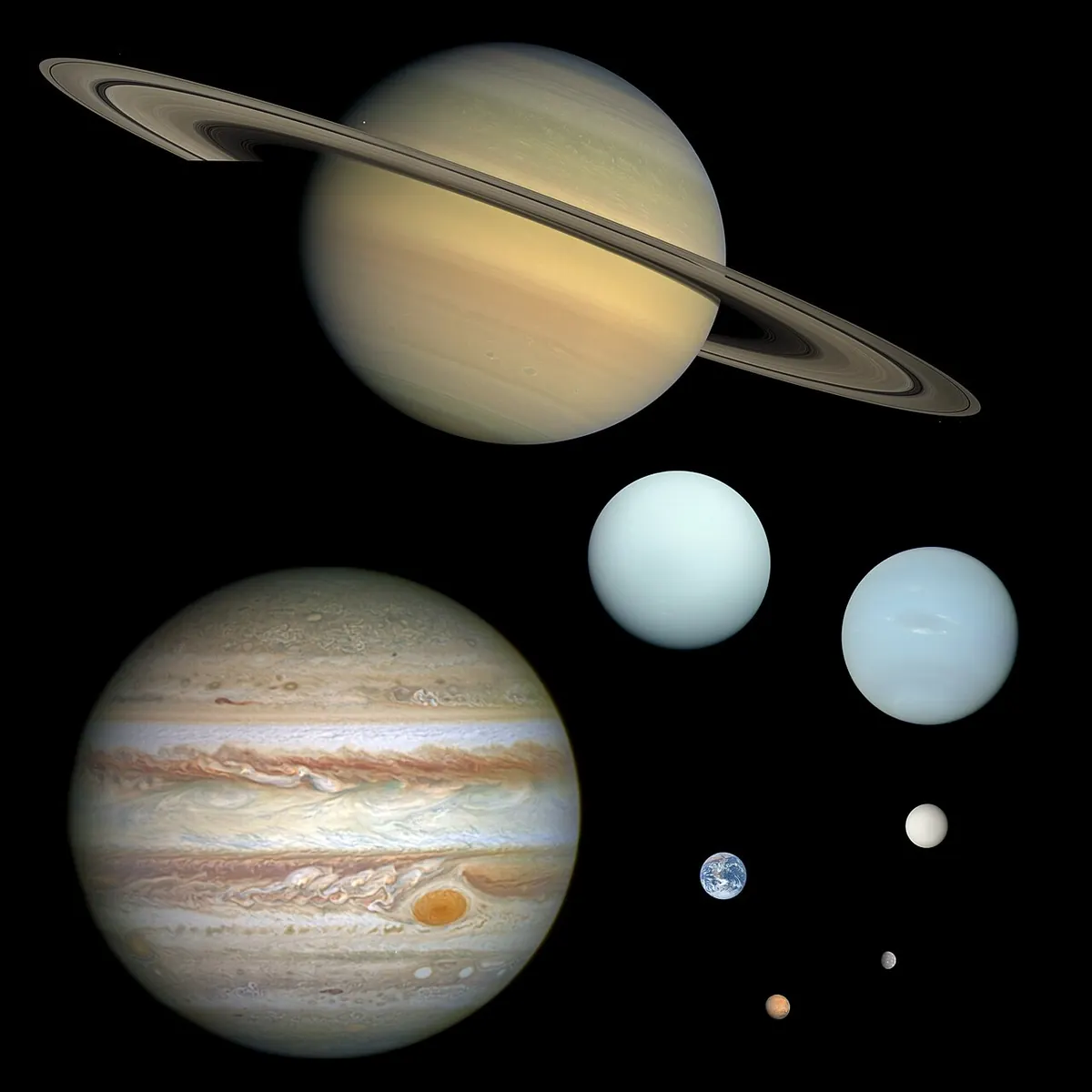
📖 In short
Planets are large round bodies that go around the Sun. The solar system has eight planets: Mercury, Venus, Earth, Mars, Jupiter, Saturn, Uranus and Neptune. Pluto used to be counted as the ninth planet, then in 2006 scientists classed it as a dwarf planet.
🤩 Did you know?
- If the Sun were a big ball, Jupiter would be a little pea tens of meters away.
- Jupiter is about a tenth as wide as the Sun.
- Astronomers have discovered thousands of planets going around other faraway stars.
- Earth is the only planet we know has life on it.
🔎 Find out more
🌟 Rocky planets
The four planets closest to the Sun are small and rocky: Mercury, Venus, Earth and Mars. They have solid surfaces you could stand on.
🔍 Gas and ice giants
The four faraway planets are huge: Jupiter and Saturn are gas giants, and Uranus and Neptune are ice giants. They all have rings and many moons.
💡 Planets don't shine
A star makes its own light, like the Sun, but a planet doesn't shine; it reflects sunlight. That's why we see Venus and Jupiter shining in the sky.
🎯 How did they form?
Scientists think the Sun and the planets formed about 4.6 billion years ago from a huge cloud of gas and dust that clumped together and began to spin.
🧩 Test yourself
1 How many planets are in the solar system?
2 Does a planet shine by itself?
3 Scientists think the Sun and the planets formed about ?? .
4 Which picture shows “Planets”?
🪐 Discover more
📷 Picture sources: Wikimedia Commons
- CactiStaccingCrane · CC BY-SA 4.0
