🪐 Space and stars 🌈 Sights in the sky
Sunspots
📖 In short
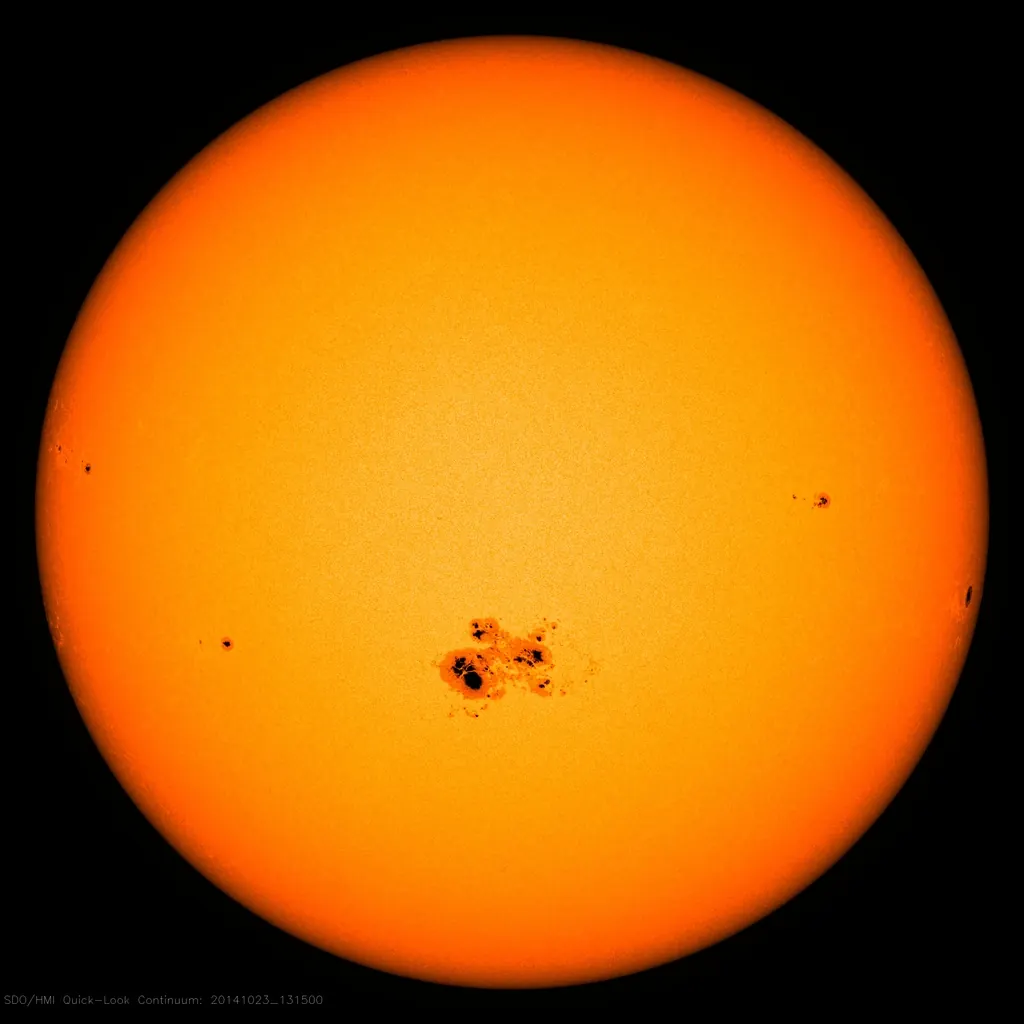
Sunspots are dark patches that appear on the Sun's glowing surface. They look dark because they're a little cooler than the rest of the surface, but they're still very hot! Some are enormous, several times bigger than the Earth.
🤩 Did you know?
- A sunspot is about 4000 degrees, and the area around it about 6000 degrees.
- A big sunspot can be 32 thousand kilometers across.
- Sunspots usually appear between 5 and 15 degrees north and south of the Sun's equator.
- The magnetic field in a sunspot is thousands of times stronger than normal.
🔎 Find out more
🌟 Magnetic spots
Sunspots form where very strong magnetic forces stop some of the heat from inside the Sun reaching the surface, so those places cool a little.
🔍 They move and change
Sunspots appear and vanish, and move across the Sun's face because the Sun spins. From their movement scientists learned that the Sun turns about once a month.
💡 The eleven-year cycle
The number of sunspots rises and falls in a cycle of about 11 years. When there are lots of spots, powerful explosions happen on the Sun, causing the polar lights on Earth.
🎯 Don't look yourself
Scientists watch sunspots with special telescopes and strong filters. You must never look at the Sun directly or through an ordinary telescope.
🧩 Test yourself
1 Why do sunspots look dark?
2 About how long is the sunspot cycle?
3 A big sunspot can be ?? thousand kilometers across.
4 Which picture shows “Sunspots”?
🪐 Discover more
📷 Picture sources: Wikimedia Commons
- NASA Goddard Space Flight Center from Greenbelt, MD, USA · Public domain
